Mathis/Cory Goes Organic
By Denice Rackley
Land in central Iowa is prime real estate, but in the 1870s when the Mathis family came to the area, opportunities and religious and political freedoms attracted immigrants, and the fertile Iowa prairie gave them ample reason to stay.
Sitting a stone’s throw away from both I-80 and I-35, past residents of the farm wouldn’t believe the land they once walked now sells by the square foot. A Des Moines suburb, Ankeny seems to grow by the day. Not long ago, farms dotted the rolling hills; now houses sprout overnight.
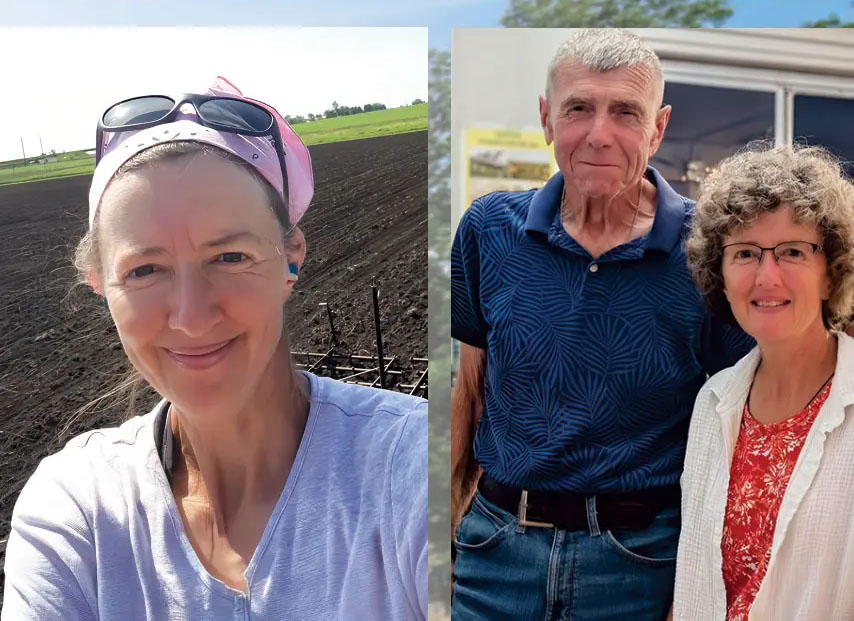
Witnessing profound changes in his lifetime, Jim Mathis will be 82 this summer. The barn stalls that used to contain horses are now used for storage. The smell of horse sweat and hay has been replaced by oil and gasoline fueling equipment that farmers of his generation couldn’t have even dreamt of in their youth.
The rural rite of passage of summers spent detasseling corn has faded into stories told to kids with access to the world in the palm of their hands.
In the house that quietly whispers of times past, Mary Cory and her husband, Tom, have raised their family in the same house she and her dad grew up in. “The original farmhouse where my great, great-grandparents lived is no longer here. Our house was built in 1909 and has been home to five generations,” Cory noted.
Iowa agriculture runs deep on this land. “My grandfather, R.C. Mathis began Iowa State Hybrid Seed Company. He was a contemporary of Henry Wallace, who founded Pioneer Hybrids.”
Large iron horseshoes rise from the fields where work horses once pulled plows. Cory sees the horseshoes as silent reminders of all the blood, sweat and tears this land has absorbed over the last century and a half.
“I am very blessed that my family has been able to keep this land and make a living here, handing it down to subsequent generations,” said Cory.
When Cory graduated from high school in 1988, Ankeny was home to around 5,000 people. The latest data from 2024 has the population listed as 76,000.
Shifting Away From Conventional Farming
The Mathis/Cory farm is about 400 acres total if you add the crop ground owned by Mathis to the 100 acres of pasture land the Corys own. But the amount of land isn’t what’s important to Cory; it’s the peace of mind that comes from knowing that she is growing food she doesn’t have to apologize for.
Like most of the surrounding land, the Mathis farm grew conventional corn and soybeans. One of the things we all can count on is change – change comes to families and agriculture.
The Corys life revolved around their five children and livestock, with Tom’s days spent in the classroom teaching agriculture and working with FFA students. While the kids were growing up, Mary and Tom fed out calves and had a flock of ewes, direct marketing grass-fed beef and lamb. They supplied local restaurants and delivered to local customers in addition to having on-farm pick up.
Mary enjoyed raising livestock, and Tom gravitated to marketing. “Tom was a teacher and loves interacting with people and passing on some of his knowledge. Direct marketing suited Tom, giving him a pathway to discuss farming with customers,” Cory said.
As Mary’s dad began contemplating retirement, Mary’s son, Gavin, asked about establishing 20 acres of organic crop production that he would direct market. Mary and Tom were already direct marketing meat, adding organic produce seemed like a good fit to the family’s naturally raised beef and lamb.
A few years later Gavin married and moved to Minnesota, but the first organic acres sparked an idea. “I began thinking about continuing what Gavin had begun. Maybe I could rent the farm and transition it to organic production.”
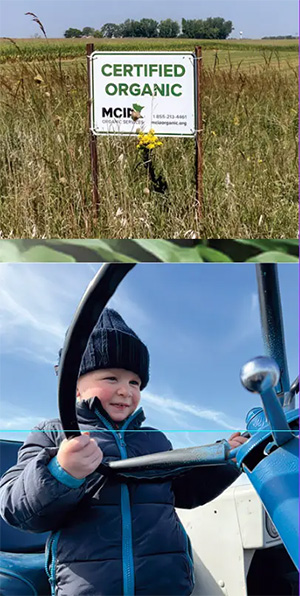
With her father’s blessing, the Corys began planning the slow transition in 2019. Following conventional soybeans, the ground was planted to organic oats underseeded with alfalfa and grasses for hay production. Oats were harvested, and the forages remained to be harvested the following year as hay. Corn planted the next spring completed the transition from conventional farming to organic.
“As the work was looking like it would pay off, a few days before corn harvest in 2020, a derecho came through. After just 40 minutes, the field was flattened,” said Cory. Fortunately, even with the decreased harvest, Cory was able to meet her obligations. As everyone in farming knows, nothing is guaranteed.
Despite the challenges Cory believes, for her, growing organics are the way to go. In 2025, all 300 acres became certified organic. “Our corn and soybeans go to livestock feed, but the high-quality oats typically make food grade,” she says proudly. Cory hopes to integrate cover crops and livestock onto the producing acres to add some natural weed control and nutrients.
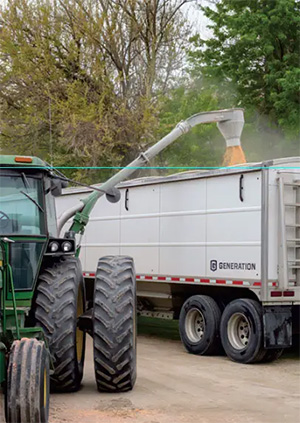
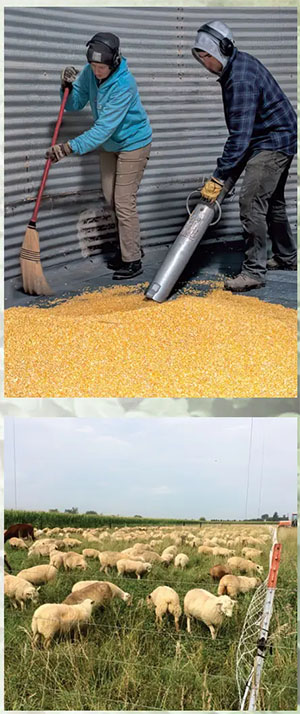
It isn’t only the planting and growing of organic crops that present unique challenges. Harvesting does too, especially if you hire it done. With few organic farms in the area, all hired harvest equipment must be disassembled and thoroughly cleaned before harvesting organic grains. And storage facilities require similar attention to detail.
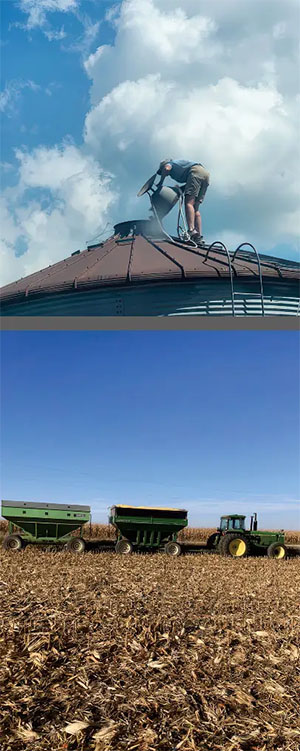
“With no storage facilities on the farm, dad would simply haul his corn and beans right to the elevator,” Cory said. “Fortunately, I am able to rent storage bins from my uncle. With only fans in the bins to help dry the grain, I plant early corn, so it dries down in the field before harvest.”
Once harvest is complete, work doesn’t end. Marketing is built on knowledge and relationships, and to do it well, you must keep your head in the game. Family obligations require Cory’s attention, and in the precious time not attending to people or livestock, she prefers to be in the fields, not on the phone. Even so, she handled the marketing solo for the first three years. Thankfully, partnering with National Farmers has taken that chore off her already long to-do list.
Attending a variety of learning opportunities and farming conferences, she began hearing about National Farmers and its organic marketing program, NForganics. After a few years of marketing on her own, she reached out to the organization. As the saying goes – ‘The rest is history’. Cory is thrilled to not have to worry about the details that come with selling the grains she grows.
“Mike and Melanie are great. They are responsive and take care of all the details from finding great buyers to contracts, and even line up the trucking.”
Knowing National Farmers professionals are tuned into the market each and every day gives Cory peace of mind.
She feels that the NForganics staff, with their ear to the ground, can navigate market fluctuations better than she ever could. “I never question whether I am getting a fair market value for my crops; I know I am.”
Currently, Mary and Tom continue to raise lambs but sell them at auction rather than direct marketing. Having returned to Iowa with his family after serving in the military, Spencer, their oldest, is now helping on the farm and has started a flock of hair sheep.
Gavin and his wife are happy in rural Minnesota where he is growing organic vegetables for consumption and seeds. Luke, next in line, splits his time between Texas and Ankeny. He works as a diesel mechanic in two-week stints and spends his off time in Iowa. James is in Oklahoma working in turf management for a golf course. And Lorrinda, the youngest, will graduate from high school next year.
With four children embarking on their paths, a fifth to begin her journey soon, and Tom retired, Mary and Tom have time to contemplate what’s next.
Cory isn’t sure what the future holds for their land. But, for now, she is happy to continue working in the fields producing organic grains.
Beginning and ending her days on the front porch where past generations also surveyed the land, Mary is grateful and feels blessed to have sweat on her brow and dirt under her fingernails, producing food she can be proud of and getting it into the hands of consumers with the help of National Farmers.
Working Together Key To Success
Selling fats to JBS in Wisconsin works well for the Swansons. “We have a great relationship with Dennis Bertrand and Nexus Marketing,” Aaron said. But it isn’t that the Swansons make more per head by using Nexus since the basis is the same; it’s the peace of mind that comes with the added flexibility from the partnership that makes the difference.
Aaron explains that signing contracts as an independent producer means that the cattle must be delivered on the agreed-upon date. There is no wiggle room. But the steers don’t read the contracts or agree to dates, and plans don’t always work out as envisioned. “Working with National Farmers as a marketing group gives us the added flexibility to market the cattle when they are ready,” Aaron said.
“Keeping things as simple as possible is the goal.” He said hiring help and new equipment seem to take more time and complicate things.
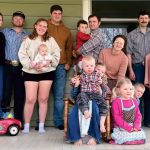
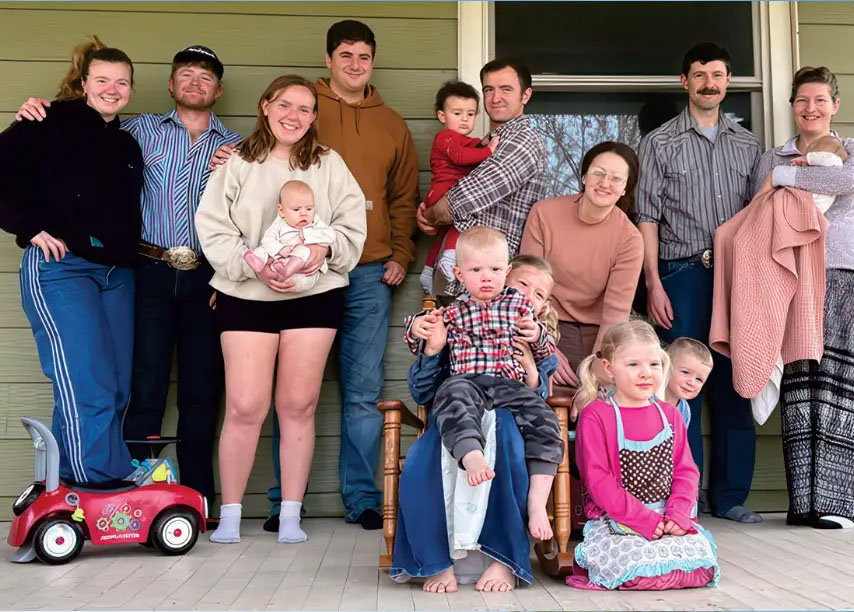
Kristy wrangles the grandchildren while all the men take care of the cattle and crops. Lunches are shared together at every opportunity, enabling everyone to take a break and enjoy time with the youngest Swansons.
“Unlike in high school, all the boys enjoy each other’s company and even hang out together when we are not working, and Kristy enjoys watching the grandkids and having everyone nearby.” The boys enjoy working together, seeing their kids and nieces and nephews during the day, and the short five-minute commute to mom and dad’s doesn’t hurt.
“Most days, working with family is a blessing,” Aaron said with a quiet laugh.