Diversifying For Success
By Denice Rackley
Leaving Germany during a difficult time, the Zwebers came to America hoping this new land would hold opportunities. After some time spent on the plains, in 1906 Tim Zweber’s grandfather purchased land in Elko, Minnesota. The small family farm that began 120 years ago is now home to three generations of Zwebers, milk cows, beef cross calves, pigs and chickens.
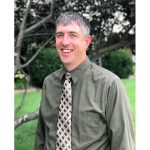
Understanding that past sacrifices have smoothed the path for him and his family, Tim Zweber can’t imagine a life that isn’t centered on the farm. “The dairy industry has changed immensely in just my lifetime, but we keep pushing forward.”
With dedication, hard work, and a mischievous sense of humor, Zweber tackles each day as it comes. With over thirty years of experience putting systems in place that enable day-to-day operations to run smoothly, Zweber believes the cows should work for the family, rather than the family working for the cows.
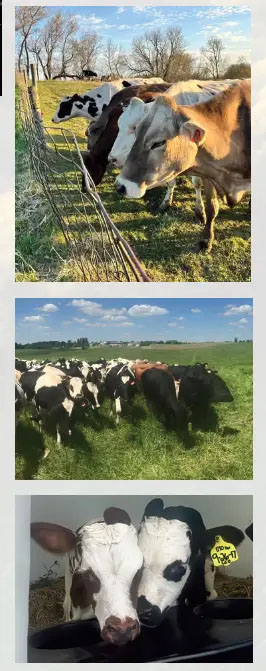
The Zwebers milk a mixed herd of 80 to 100 cows. Normandy, Jersey, and Brown Swiss cows join the Holsteins, which comprise fifty percent of the herd. The freestall sand-bedded barn has replaced a tie-stall setup that began with stanchions. And the double swing parlor suits the Zwebers just fine.
“Technology is great, but when it goes down, you are in trouble,” Zweber said. “Our milk pump is the most technologically advanced piece of equipment we have.” Spoken like a true rock climber, he explained with a chuckle, “If I can’t fix it with a rope, I don’t want it.” A rope is a step up from baling twine, after all.
Getting Paid More
In 2007, when Zweber returned from the University of Minnesota with a degree in dairy production, the accountant was adamant – either the farm needed to double production or increase profits from the milk they were already producing. The thought of adding more cows only seemed to guarantee more expense and work; going organic, however, held promise. “We were already doing most of the things required to go organic, so that is the direction we went.”
That step into organic production is when the relationship with National Farmer was forged. “I had heard about NFO my whole life, so once we shifted to organic production, it was a natural fit. My uncle, Clint Zweber, is a big supporter of NFO,” he explained.
Zweber is happy working with National Farmers staff, “I enjoy working with our rep, Selana Stamson, she is great.”
Forage Management
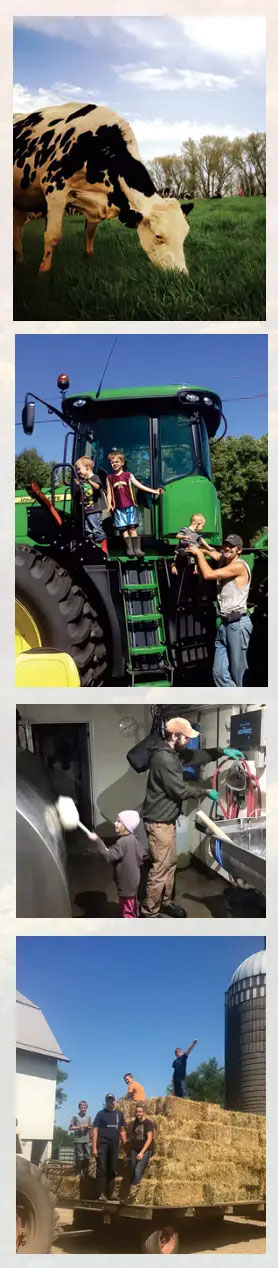
Soon after transitioning to organic, the dairy committed to grass-fed. The grass-fed designation resulted in a price incentive for their milk while decreasing input and equipment costs. Dairy cattle are intensively managed on pasture with paddock rotation coinciding with milking. “The dairy cows are moved to new pasture every 12 hours, which doesn’t really require additional work, just good planning,” Zweber noted.
However, lush pastures can present problems. “There are times the cattle would rather snooze in the grass and not come to the parlor.” Motivation then arrives in the form of ATVs and dirt bikes. “We use dirt bikes in the summer; they’re more fun.”
The transition to an all-forage diet has improved cattle health and elevated pasture management to near the top of the to-do list. Pastures are no-till drilled with nutritionally dense forages as needed to supplement what grows naturally. “It seems the hardy grasses, like brome and fescue, that the cattle don’t care for. They are also the least nutritious, so we interseed with legumes and clovers every few years.” Feeding hay on pasture also aligns well with the Zwebers’ management philosophy.
“The rotation of grazing cattle keeps the forages from going to seed while allowing enough rest for regrowth of tender, nutritious forages. And as an added benefit, cows fertilize pastures themselves. In addition, feeding hay on pasture during the winter returns lots of nutrients to the soil, improving next year’s growth,” Zweber said.
A forage-based system in Minnesota requires lots of hay, so summers are spent in the hay fields. Utilizing each acre for maximum benefit, those pastures without large hills are rotated into service as hay fields when production slows.
Calf Production
Cows are milked year-round, necessitating the birth of calves throughout the year. However, the Zwebers take the cold, snowy Minnesota winters and hot, humid summers into consideration. Giving the family a much-needed break, Zweber said, “We don’t have calves December through March or July through mid-August.”
Using sexed semen, the top-producing cows are artificially bred. You would think that the extra effort and expense of AI and sexed semen would guarantee heifer calves, but Murphy’s Law is ever-present. “Those girls that I really want heifers out of have bull calves. I tell the new mom that the calf was supposed to be a heifer, but that doesn’t seem to matter.”
Calves are fed milk and offered hay for about five months before transitioning to pasture and a strictly forage diet. “Feeding calves milk for an extended period gives them extra nutrients, allows time for rumen development and provides a cost-effective outlet for the milk that can’t go into the bulk tank,” Zweber noted.
Zweber noted, in reality, sexed semen is only accurate about 86 percent of the time. “We really don’t want straight dairy bull calves.” Crossbred calves, however, are a great fit for the Zwebers.
The majority of cows and all the heifers are bred naturally by Angus bulls. Zweber believes using Angus bulls reduces calving trouble. “I don’t like getting out of bed to babysit cows that are calving. I’ll do it, but I don’t like it.” This approach must be working because, on average, only one or two cows need assistance each year.
These crossbred calves are destined for Zweber’s grass-fed meat business. “Needing only 25 dairy heifers for replacements, it’s economically advantageous to produce a faster growing calf that fattens well on forages.”
On-Farm Retail Business
The Zwebers farm retail store provides a value-added income stream. Grass-fed beef and chicken, pasture-produced eggs, and pork are sold directly to customers.
The cross bred calves utilize lower-quality forages and pastures not suitable for dairy cows. Harvested around two years of age, the quality meat has built a reputation that continues to grow. The farm store is staffed by family, enabling customers to interact directly with the people who produce the products. This interaction gives the Zwebers the opportunity to educate the public and build connections in their community.
Making It All Work
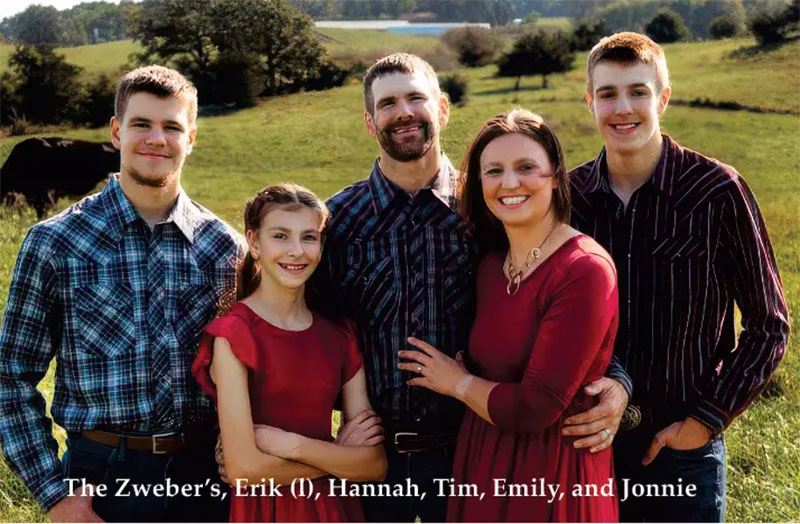
Three generations of Zwebers call the dairy home. There is plenty of work to go around, and each person utilizes their interests and skills – Tim’s dad, Jon, milks and manages hay production, Tim’s mom, Lisa, handles the farm store and all the books.
Tim’s wife, Emily, heads up calf care while also milking and pitching in with haying. Two of Tim and Emily’s three children lend a hand on the farm – Jonnie excels in all things mechanical, while Hannah prefers working with the cattle. Erik, their oldest son, lives in Vermont but pitches in when he visits.
And Tim heads up the morning milking, takes care of the breeding management and is chief builder and maintenance man. It is no secret that Tim is hoping to retire his wrench and pass all those maintenance chores to Jonnie as soon as possible.
Until that time, Tim Zweber will reluctantly keep the tools close, unless, of course, a rope will do.