Family Takes Center Stage.
By Denice Rackley
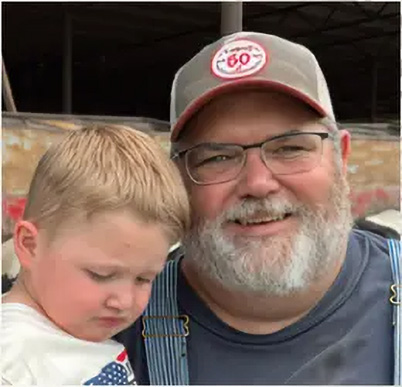
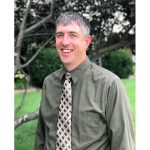
“I promised my wife, Kristy, we would never have more than 250 head of cattle,” said Aaron Swanson of Russell, Minnesota. What’s a farm wife to do but simply nod in agreement, make contingency plans and remind her dear husband of that promise every now and again.
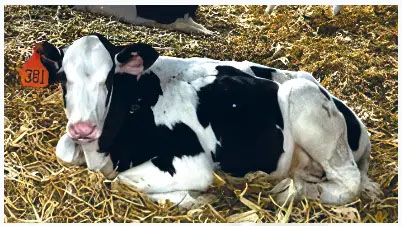
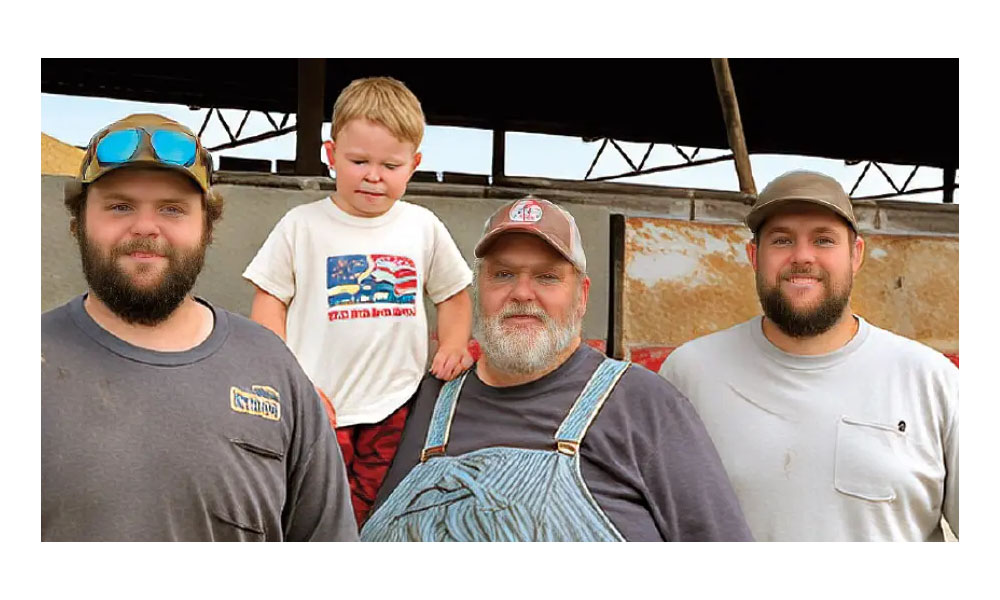
Flying well past a mere 250 head, the Swansons fatten around 1,000 Holstein steers each year. Actually, every other month, they bring in 200 head of calves to begin the 16-month-long process of going from weaned to ready. In Aaron’s defense and to Kristy’s delight, the cattle operation is truly a family affair. “All of our sons live within ten miles of us and are involved,” Aaron said.
But the Swanson roots go deeper than the current generations. Aaron’s great-grandfather began farming in 1891. Adding acreage with each generation, the Swanson name currently appears on about 1350 acres in and around Russell.
The Swansons
Like many original homesteaders, the first Swansons did what it took to feed their family and survive. Cattle were dual purpose – dairy and meat, work horses sweated in the fields, chickens provided eggs and went into the dinner pot, and pigs … you know the saying – everything was used but the squeal.
The Swansons had a tougher go of it than many because Aaron’s great grandmother took the reins, keeping the farm going and raising the kids when her husband unexpectedly passed. “My grandfather was twelve or thirteen when his dad passed, but they kept the farm going,” Aaron noted.
Pigs were replaced by additional dairy cows and the homegrown workforce found themselves in the dairy business. “In 1968, my dad took over the dairy. He sold the calves and farmed. Many of his brothers remained in the area, raised families, crops and livestock.”
Transitioning out of milking during the 70s, the Swansons applied what they knew about raising Holsteins and began buying bottle calves from neighbors, selling the calves as feeders.
Feeding Cattle
“We started by buying 25 bottle calves, but as the boys began to graduate and move out of the family home, we stopped bottle feeding and bought weaned calves to finish.”
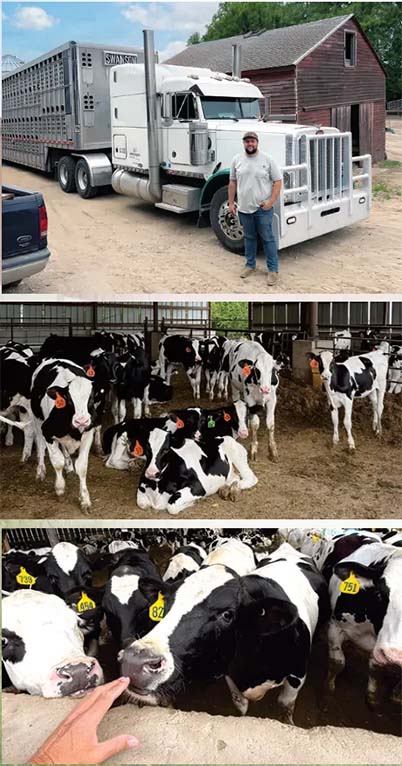
Calves are purchased predominantly from Amish farmers in New York, Michigan and Pennsylvania. At the Swansons, arriving calves are divided into six or seven groups of 30. “The smaller groups enable us to vaccinate and monitor the calves and get them going well on full feed,” Aaron said. Once the calves weigh around 500 pounds, the group gets put back together until they are sorted for shipping.
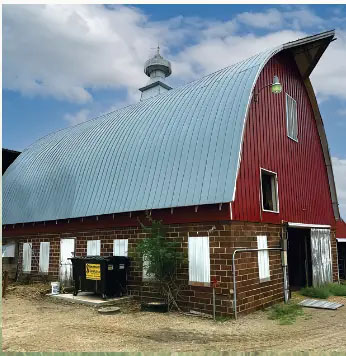
Calves are housed in outside lots at several sites, some half-covered, others fully under roof. New, young calves get deluxe accommodations, closest to Aaron and son, Jed. Building the monoslope barns themselves, pouring the concrete, building the trusses from old oil field pipe in the shop, to actually putting it all together is a long process.
“The barns cost us about half as much as someone else would need to pay,” Aaron said. The lower cost enables all Swanson cattle to be under roof, which translates into lower feed and bedding costs, better feed conversion and overall happier steers.
The Holstein steers have access to full feed with self-feeders and are offered a mix of corn, soyhulls, dry distillers’ grain, and a balancer mineral. Cornstalks are used to bed the lots about three times a week, and according to Aaron, the calves help themselves to about half the bedding. “We don’t feed hay.” About every 10 weeks, the Swansons ship out around 200 Holsteins, each weighing about 1,500 pounds.
Keeping Overhead To a Minimum
Making the cattle operation a true family business in every sense of the word, the Swansons work together to keep input expenses low. Like most feeding operations, nearly all the feedstuffs are grown on family-owned land. Cattle lots are also on Swanson land. Older equipment, a TMR mixer, and a couple of feed trucks get the job done and, for the most part, enable repairs to be made at home.
And guess who does all the trucking? Yep, they have that covered, too. “Evan drove a truck for the neighbors after college, and we were hiring someone to haul cattle for us. In 2021, he began Swanson Farms Trucking. He hauls our calves in and fats out in addition to hauling cattle and hogs for other folks,” Aaron explained.
Austin, the eldest son, lives nearby and works off the farm at a coop but lends a hand when needed. Evan partners with raising calves, runs the trucking business, is chief mechanic and oversees herd health. Jed, second oldest, works with Evan driving trucks, is the head welder and calf bedder, and handles summer crop spraying.
The youngest, Payton, works part-time on the farm and full-time at a local coop. And Aaron keeps a close eye on the cattle and his sons, filling in where and when needed and handles the marketing.
Working Together Key To Success
Selling fats to JBS in Wisconsin works well for the Swansons. “We have a great relationship with Dennis Bertrand and Nexus Marketing,” Aaron said. But it isn’t that the Swansons make more per head by using Nexus since the basis is the same; it’s the peace of mind that comes with the added flexibility from the partnership that makes the difference.
Aaron explains that signing contracts as an independent producer means that the cattle must be delivered on the agreed-upon date. There is no wiggle room. But the steers don’t read the contracts or agree to dates, and plans don’t always work out as envisioned. “Working with National Farmers as a marketing group gives us the added flexibility to market the cattle when they are ready,” Aaron said.
“Keeping things as simple as possible is the goal.” He said hiring help and new equipment seem to take more time and complicate things.
Kristy wrangles the grandchildren while all the men take care of the cattle and crops. Lunches are shared together at every opportunity, enabling everyone to take a break and enjoy time with the youngest Swansons.
“Unlike in high school, all the boys enjoy each other’s company and even hang out together when we are not working, and Kristy enjoys watching the grandkids and having everyone nearby.” The boys enjoy working together, seeing their kids and nieces and nephews during the day, and the short five-minute commute to mom and dad’s doesn’t hurt.
“Most days, working with family is a blessing,” Aaron said with a quiet laugh.