Embracing Tradition, Adding Technology, Creating a Sustainable Path
National Farmers – Trinity Valley
Challenges within the dairy industry have touched every dairy family. The future of small dairies lies in a simple truth: Meet the challenges or exit the industry.
Getting down to the nitty-gritty, the economics must be sustainable. If we can count on anything within the agriculture industry, it’s that producers find creative solutions to tough problems.
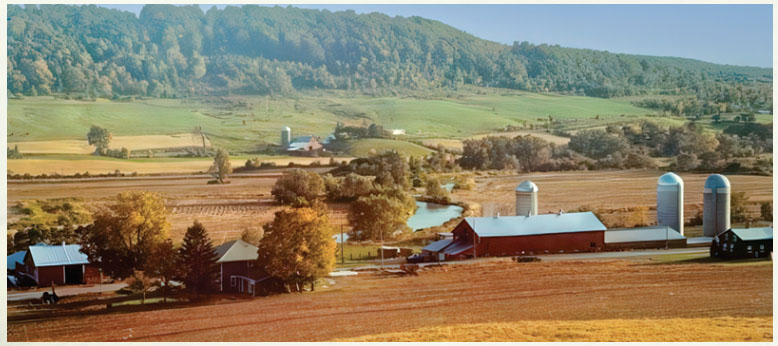
Family dairies have thrived for centuries in New York’s lush Cortland Valley. One such operation began as Sunset Young Dairy. The original owners would hardly recognize the modern dairy that sits on the original homestead. The change in name only hints at all that has taken place over the last three generations.
Trinity Valley Dairy is forging its path to the future by embracing tradition, adopting technology and meeting the needs of the community.
Ottis and Hazel Young settled in the community in the 1920s. Ottis bought and sold cattle, grew cabbage for the local sauerkraut plant and began milking cows. Cattle paid the bills, and cabbage paid for everything else. All seven children followed in his footsteps, continuing in the dairy industry.
In the 1960s, Ottis Jr. and Kathy Young accepted the reins and continued Sunset Young Dairy. In the late 1980s, management shifted to their daughter, Sue, and her husband, Ken Poole, who continued to milk Holsteins.
Roots sank deeper and generational knowledge expanded as the dairy weathered industry changes thanks to committed family members at the helm. Returning to the farm where she grew up, Rebeka and her husband, Brandon Brown, are ushering in a new era in this valley.
To make the economics work for supporting two families, there have been major changes. On that generational homestead, the latest technology is mixed with tradition.
A cornfield now hosts a production and bottling facility. Holsteins were replaced by Jerseys, robotic milkers were introduced, and a storefront was built to boost local products — but later reclaimed when more production space was needed. Milk was purchased to meet product demand, but economics proved that bringing back Holsteins to capitalize on labor availability and a growing product line was the way to go.
Everyone connected to the dairy industry knows fluid prices are far from stable. Input costs rise far faster than what farmers receive for their commodity. One way to overcome this upside-down reality is by marketing value-added products.
National Farmers – Trinity Valley
Saying Trinity Valley Dairy has leaned into this value-added path might be an understatement.
Leaving their nursing and construction careers behind, Rebeka and Brandon committed to growing the dairy so it would support their future family and Rebeka’s parents. It wasn’t difficult convincing Brandon to lay down the hammer and pick up a pitchfork.
“As a kid, I remember telling my parents I wanted to be a dairy farmer,” he said. Living a dream doesn’t mean it comes easily — usually more work than anyone imagined is required to turn dreams into reality.
Knowing a traditional 150-Holstein dairy wasn’t going to make ends meet, the couple had to come up with a viable option. Those dreams and conversations around the kitchen table about serving their community and building a sustainable legacy began taking shape as a milk plant was built.
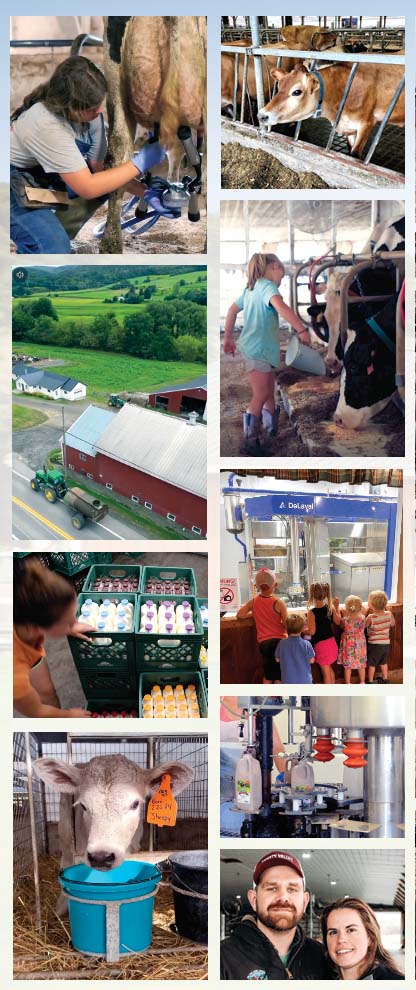
Bottling their milk, making cheese curds and selling to retail stores is labor-intensive. Transitioning to Jerseys enabled higher butterfat in their products, and robotic milking freed up labor to invest time in other farm enterprises.
“It’s difficult reaching the correct product fat-to-protein ratio,” Brandon said. “At first, we bought milk, but the economics were not working out, so we brought in Holsteins and remodeled an older barn to increase cow comfort. The Holsteins are parlor-milked, averaging 89 pounds of production, and are content with tunnel ventilation in a tie-stall barn with added fans and access to pasture,” he noted.
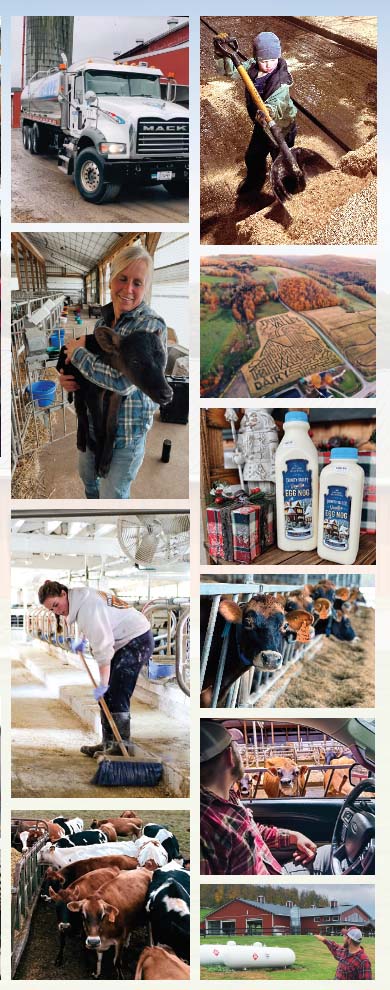
Holstein milk is used to produce 15,000 gallons of cheese curds each week, and Jersey milk comprises Trinity Valley’s creamline products.
Unlike most milk products that are pasteurized at a high temperature and homogenized to break up and evenly distribute the fat, Trinity Valley takes a different approach.
“Our milk undergoes low-temperature pasteurization, which ensures its safety but doesn’t alter the great taste or nutrition profile. Our milk products aren’t homogenized. The cream rises to the top and is visible,” production and sales manager Katie Bush said.
Much like milk that was delivered to houses in glass bottles, Trinity Valley products need to be shaken before poured. Whole milk, cream, half-and-half, chocolate milk, buttermilk and seasonal eggnog are among the Trinity Valley creamline offerings delivered each week to local retail stores. Wegmans, a regional grocery chain, also stocks the fresh dairy products in its stores.
“Our partnership with Wegmans enables us to provide our cheese curds and milk products to a wider base of consumers,” Bush said.
The rustic label shaped like a milk can, often showing the face of a Jersey cow, speaks to the dairy’s commitment to providing wholesome products reminiscent of days past.
“Our label captures a feeling and tells a story. Since we rebranded with this label, sales have increased,” Bush said.
When production exceeds product demand, the dairy turns to National Farmers.
“Our partnership with National Farmers has been a godsend,” Bush said. “National Farmers is incredibly responsive. When we have extra milk, one phone call and that milk is picked up and transported to other milk plants, creating a win for everyone involved.”
National Farmers – Trinity Valley
Behind the scenes, cow care proceeds each day similarly to other dairies in the country. Growing feed, harvesting, feeding cows, cleaning, breeding cows and raising calves all are accomplished with the help of employees, family and technology.
“The Jersey cows adapt easily to the DeLaval robotic milker, and the DeLaval OptiDuo mixes and repositions feed, ensuring feed is available whenever the cows want it,” Brandon said.
The Trinity Valley team goes all in when it comes to educating others about farming, dairy nutrition and the benefits of farm-to-table products. They create educational videos, offer tours and even host a corn maze providing memorable experiences.
What’s next at the dairy? A new farm store offering a variety of local products and exploring new products. The team is planning on adding possibly the most loved dairy product in the world — homemade ice cream complemented by homemade waffle cones.
What began as a dream to build a stable income and preserve their family’s dairy legacy for future generations evolved into bottling Trinity Valley milk, serving and educating their neighbors and uplifting each farm family that works tirelessly to provide fresh, nutritious food to their community and consumers.