Making Cattle King
By Denice Rackley
In Iowa, where the price of a few acres of land could buy you a brand spanking new pickup truck, the Nieman’s fatten around 2,500 head of cattle and manage their risk with the help of National Farmers.
Corn is king in Iowa. According to the USDA, 12 to 14 million acres are dedicated to corn in the state each year. However, on Nieman land, you might say cattle are king.
National Farmers – Nieman Family
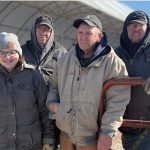
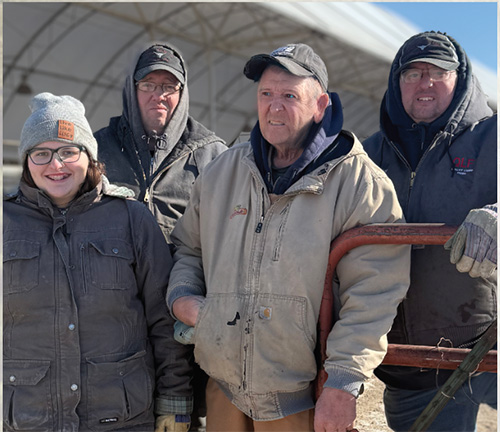
Justin Nieman, along with his brother, Kevin, and his father, Ralph, combine their talents to raise crops, fatten hogs, and feed cattle. As in most of the state, the cropland is planted to corn or beans; the marginal land that is flat enough goes to hay production and on the least favorable acres, cattle graze.
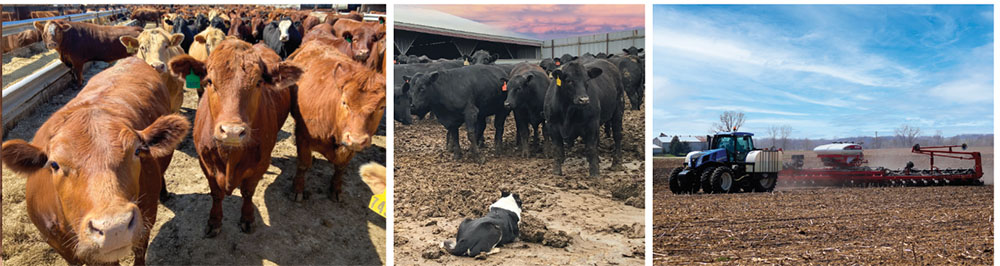
The Niemans raise crops and hay on 2,500 acres, have 200 head of commercial cows, a hog operation and take advantage of barn lots on several different homesteads to fatten calves. Operating as one entity, they divide work, expenses, and equipment to make it all run as smoothly as possible.
“My great-grandfather was the first to put down roots here,” said Justin Nieman. Today, Niemans are spread out around the area, which has presented significant opportunities. “With current land prices out of reach, we are fortunate to own quite a bit of land between the three of us and are able to rent land and barn lots from family.”
The productive crop ground provides income from corn and beans, feed and bedding for the cattle, winter grazing and a place to spread manure. When corn is planted and harvested as corn silage for the cattle, the land is often planted to rye for grazing or baled for bedding. If ear corn is harvested, the majority becomes a cash crop and about a third of the corn is fed. After harvest, the Niemans bale the stalks for bedding and plant cover crops that provide winter forage for their commercial cows.
The Niemans also invest time and effort into tiling their crop ground. “We tile about 40 to 50 acres at a time. Not only does it drain standing water, but it gives us dry ground to spread the manure and bedding from the cattle lots,” Nieman explained.

Dual use of the tillable acres provides options for the Niemans. “We can lower production costs while improving soil fertility,” Nieman said. “My niece Abby has been dividing the ground into paddocks with polywire and rotating the commercial Angus herd once or twice a week. It has been amazing to see the cattle better utilize the available forage and our carrying capacity increase.”
“My dad manages the commercial herd,” Nieman explained. The cows are bred to calve on pastures from late April to June, avoiding muddy lots and big swings in temperature that are common in Iowa in early spring. Weaning takes place in September or October between chopping and harvest. “We used to wean later, but feel weaning in the fall gives the cows time to gain condition before winter and be in better shape to raise their calves.”
Replacement heifers are sorted out after weaning and the rest of the calves head to a feedlot. Buying calves both locally, through cattle buyers and online auctions, the Niemans utilize seven different building sites with lots to fatten cattle, with the furthest being 12 miles away. Once calves come in, they remain in that lot through finishing.
To keep costs down, the Niemans successfully use existing lots that have been tweaked over the years to accommodate 150 to 160 head per lot, with only one exception, a recently built hoop barn.
National Farmers – Nieman Family
“We began fattening cattle in 2005 by buying 40 head,” Nieman noted. Between Justin, Kevin, one hired man, and a couple of custom feeders, the operation has expanded each year.
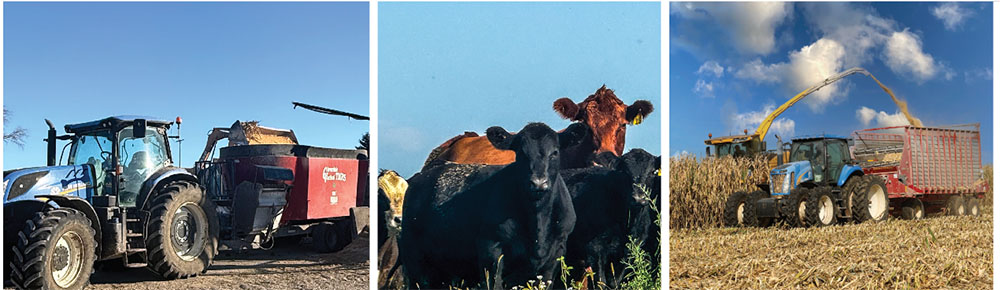
With the help of a nutritionist, rations are designed using existing feedstuffs – corn and corn silage and earlage, with purchased gluten or distillers and a balancer. With feed storage at two facilities, two feed wagons and one feed truck, calves are fed the TMR once a day either in bunks or feed alleys. Water is available with automatic waterers in each lot. “Thankfully, it has been a rather warm, open winter, at least so far,” Neiman said with some trepidation, knowing that things can shift in the blink of an eye.
Lots are scraped and bedded once a week, generally, and manure is hauled out every couple of weeks. But wet weather can throw a wrinkle in that schedule. “We bed with homemade corn stalk and rye straw bales using about 2,500 bales a year.” A portable Arrowchute tub and alleyway is hauled to the various yards, ensuring cattle are worked seamlessly at each location.
Management of cattle and feed is made easier with Performance Beef Analytics software. “We keep track of each head and health records, our rations and ingredient inventory, feed distributed to each pen, our costs of gain, breakevens, interest, and close-outs using this software and iPads. This system helps us manage our inputs, allowing us to see each day what is happening and enabling faster pivots when necessary,” he explained.
Everything has to pass the pencil test. Ration costs and calf prices must provide room for a profit. This past year required a sharp pencil. “We like to bring in calves around 500 pounds. But we buy what works, sometimes that is 500 to 600 pound calves, sometimes that is 800 pound yearlings.” This year, dairy cross calves were priced more reasonably than straight beef calves, so the Niemans gave them a whirl. “The dairy cross calves were about .25 cents a pound back from beef calves and made more sense. The crosses fattened well, and we are open to going that direction again if beef calf prices are out of range. I doubt we would consider fattening straight dairy calves, they require a different management system.”
The Niemans have also utilized a backgrounder in Kentucky who brings in bawling bull calves, gets them straightened out and doing well on feed in 90 to 120 days, then ships them to Iowa at around 500 pounds for finishing.
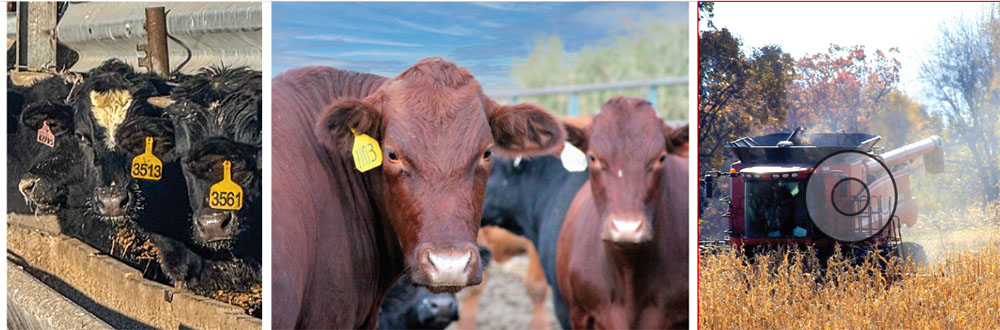
Most cattle are fat and sassy after spending a year in the Nieman’s feedlot. Ideally, fat cattle are shipped out every three weeks, and new calves take their place. But it doesn’t always work that way. “The market dictates what weight of calves will work and where they are headed once fat.”
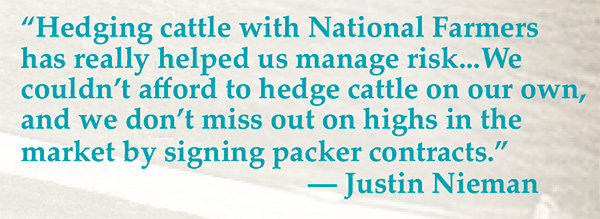
Negotiating for the best possible price, Nieman sells his fat cattle to Tyson, Aura Pak, Upper Iowa, JBS, Tama, and Greater Omaha and ensures a profit by putting a floor under the cattle with National Farmers. “Hedging cattle with National Farmers has really helped us manage risk,” Nieman said.
In years past, profit appeared with four legs, calves waiting to be fed, not as money in the bank. Having all the important numbers at their fingertips with the analytic feedlot software and working with National Farmers has been a game-changer for the Niemans. “We couldn’t afford to hedge cattle on our own. And we don’t miss out on highs in the market by signing packer contracts,” Nieman said. Now, some profit makes it into bank accounts.
“We also work with Austin at Manchester. He is very knowledgeable and has great contacts with JBS and Upper Iowa that we leverage when needed to market fat cattle.” Austin and the Manchester collection point also assist with culls. “The ability to quickly remove and market culls saves us time, feed and money,” Nieman noted.
The feeding chores are typically completed by noon, enabling the Niemans to concentrate on the other work, which varies with the seasons. The Niemans are optimistic about the future. They believe that with a keen eye on inputs, a sharp pencil, and the assistance of National Farmers, profit is possible.
No matter what lies ahead, one thing is certain: there is plenty of work to go around keeping Justin, Kevin, and Ralph out of trouble.
National Farmers – Nieman Family